
17 Feb 2026


Director of Portfolio Impact at The Earthshot Prize
Last week, I joined The Earthshot Prize team at the inaugural Mumbai Climate Week to announce that Mumbai will host our sixth annual Awards this November.
I left convinced that we couldn’t have chosen a more fitting city. We don’t select host cities symbolically – we choose them when momentum is rising. What I saw over the course of the week was a country making a serious case that economic growth and climate responsibility do not have to be opposing forces.
Bringing Earthshot to Mumbai this November is our way of recognising that leadership and helping accelerate it.
India is actively working to decouple economic expansion from emissions – an achievement that has eluded much of the world.
At the opening plenary, India’s Minister for New & Renewable Energy, Pralhad Joshi, shared a series of updates that tell a compelling story:
At the same time, India is now the fourth largest and fastest-growing major economy. Yet its emissions, rather than rising in lockstep with growth, are beginning to decouple.
The Chief Minister of Maharashtra, Devendra Fadnavis, reinforced this point: climate ambition must be high, but the transition must be inclusive.
Sustainability is not about regulatory compliance alone – it is about long-term competitiveness. Carbon efficiency, in this framing, becomes an economic advantage.
Of course, ambition is only meaningful if it translates into delivery. That kind of shift requires consistent policy signals, infrastructure investment, and increasingly, digital tools to optimise performance – whether that’s AI improving grid efficiency or smarter forecasting to reduce waste.
With renewables getting cheaper, storage becoming more viable and electric mobility moving from pilot to deployment, there are real opportunities for the financial sector to unlock transformational amounts of catalytic and blended funding at scale.
The investment required – trillions globally – cannot come from public budgets alone. It is fitting, then, that Mumbai, as India’s financial hub, has all the ingredients to become a climate finance gateway for the Global South.
As Maharashtra Minister of Environment, Pankaja Munde, said during our event, “When India leads with an idea, the world follows.”
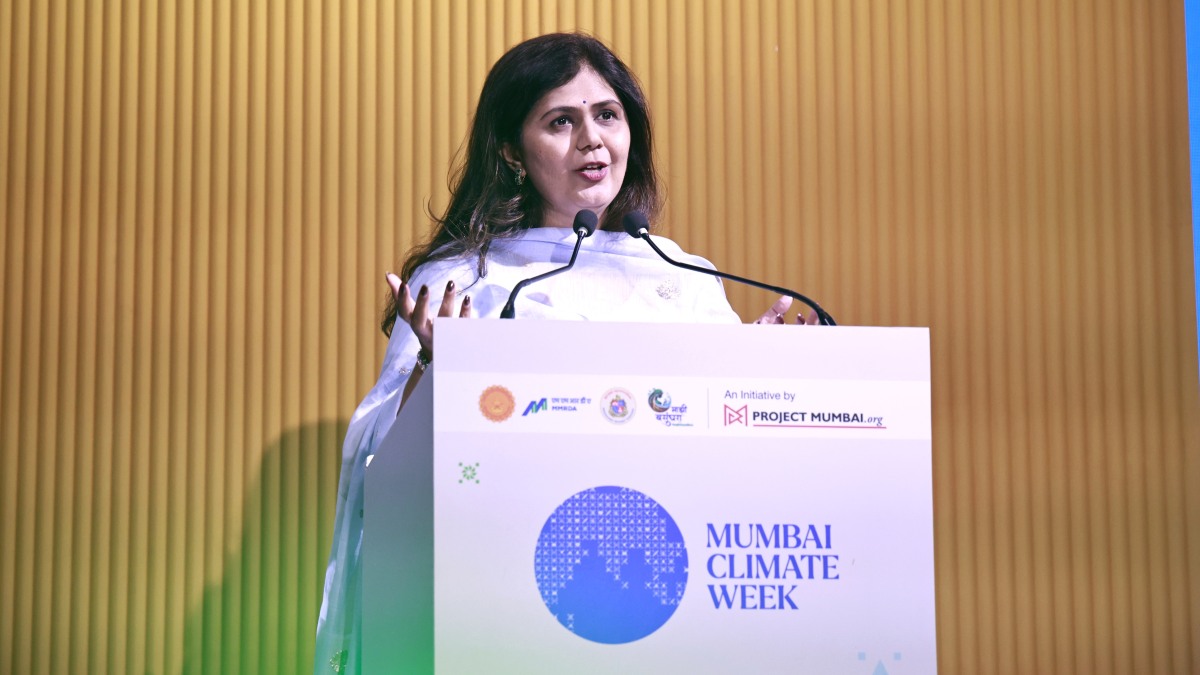
Maharashtra Minister of Environment, Pankaja Munde, speaking at The Earthshot Prize event during Mumbai Climate Week
One line in particular from Chief Minister Fadanvis has stayed with me: history will judge us by execution.
At our announcement event, I hosted a panel with our Earthshot Prize Finalists from South Asia – they offered a window into what pragmatic climate action looks like on the ground.
2022 Winner, Kheyti, is helping smallholder farmers manage climate risk through a greenhouse-in-a-box model that increases yields while using fewer resources.
As co-founder Kaushik Kappagantulu put it, winning the Earthshot Prize was about far more than funding – it gave them credibility at scale. That credibility translates into partnerships and policy traction – the Prize helped them partner with five state governments, bringing public funding to over 2,300 farmers in just the last 18 months, with 8,000 more expected to be supported this year.
2023 Winner, S4S Technologies, is reducing food waste and increasing farmer incomes through solar-powered food processing.
With support from partners like Deloitte, they’ve grown from supporting 2,000 women entrepreneurs to 10,000. That kind of scaling only happens when ecosystems align.
2025 Winner, Friendship, is working with communities most affected by climate change, strengthening resilience in some of the most vulnerable regions.
For Founder, Runa Khan, Earthshot provided a global spotlight platform to amplify those voices – and government and funders support followed.
And then there is 2025 Finalist, Gujarat’s Emissions Trading Scheme. During the week, Dr. Kaushik Deb of EPIC announced its continued expansion, describing this as their “light-speed moment.”
The ambition is bold: to expand pollution markets in ways that could help one billion people breathe cleaner air by 2030. This is market design as a climate policy.
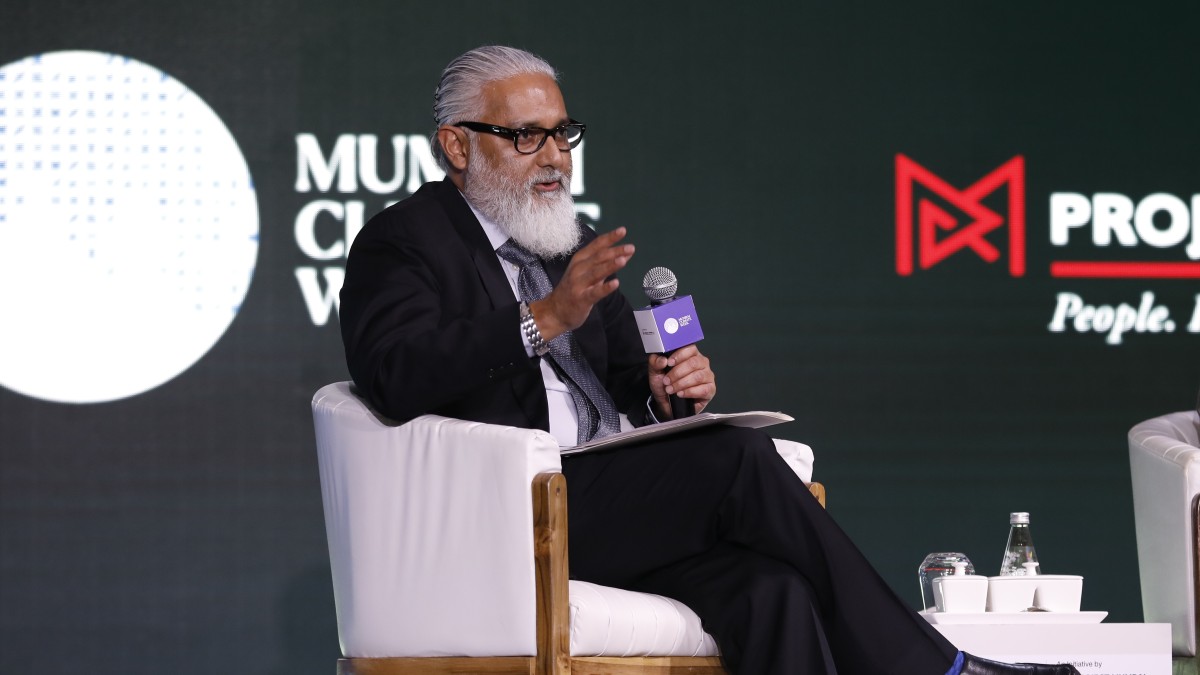
Dr. Kaushik Deb, Executive Director of EPIC, speaking at Mumbai Climate Week
The Emissions Market Accelerator captured the week’s spirit in two sessions they hosted.
The first focused on ecosystem design. Emissions markets only work when regulators, industry, monitoring systems, and enforcement mechanisms move together. Gujarat has already expanded to two additional states, with more in the pipeline.
The second session turned to fundraising. Institutional innovation – like emissions trading – requires catalytic capital. It requires investment not only in technology but in regulatory capacity and implementation teams.
We often talk about climate tech as the frontier. But climate governance innovation is just as important.
What struck me most about Mumbai Climate Week was its tone. It wasn’t performative, it was practical.
India is showing that the Global South does not have to choose between development and responsibility. If clean energy is cheaper, it scales. If carbon-efficient production improves competitiveness, businesses adopt it. If capital is structured intelligently, transitions accelerate.
Climate action is, in many ways, the defining economic opportunity of our generation. But only if we focus on what works and scale it with discipline.
So as we look ahead to The Earthshot Prize 2026 in Mumbai this November, I’m left with this thought: momentum is real, but coordination and execution is everything.
→ If you’re a corporate leader, your procurement decisions can anchor demand for more sustainable solutions – and we can help find those.
→ If you’re an investor, catalytic capital can unlock larger flows and system change – find out how our Finalists can help with that.
→ If you’re a policymaker, focus on regulatory clarity and replication of models that have already proven themselves – join our conversation.
And if you’re part of the broader climate and environmental ecosystem, lean into execution. In the end, that’s what will matter.
India is moving. We’re excited to join its journey!