Protect
& Restore Nature
& Restore Nature
Yellowstone to Yukon Conservation Initiative
2026 Finalist
Earthshot:

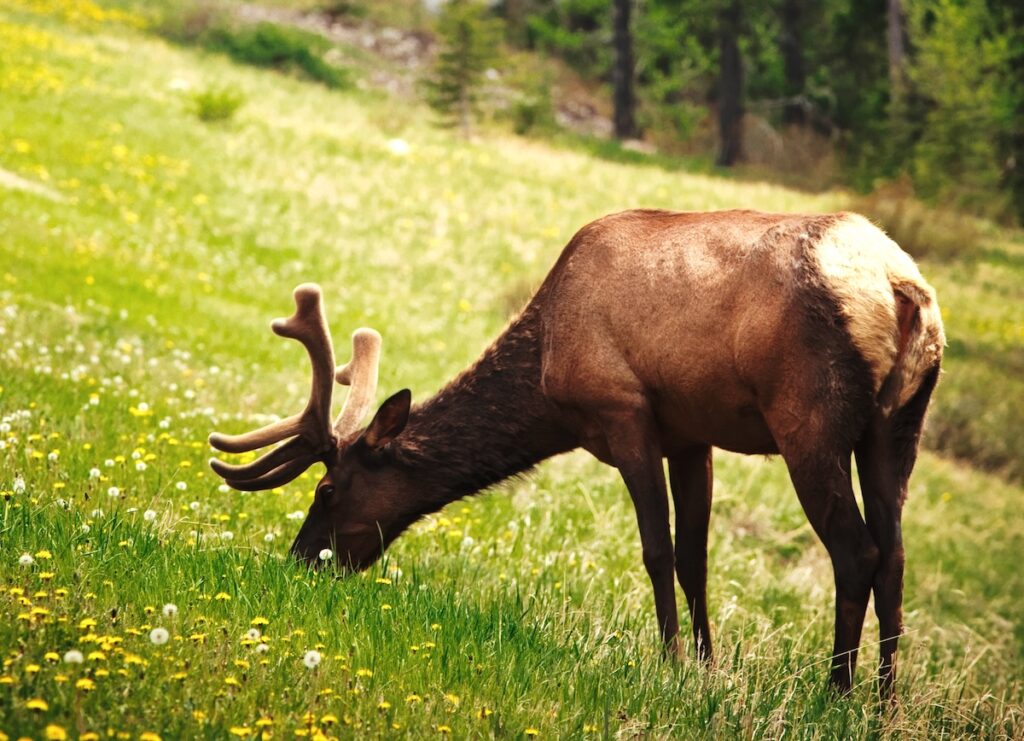
Additional footage courtesy of Planet Wild, Highway Wilding and Alberta Parks.
Animation courtesy of Movebank.
Yellowstone to Yukon Conservation Initiative reconnects a 2,100-mile mountain landscape across Canada and the US, helping grizzly bears, wolves and caribou move freely again while protecting one of Earth’s last truly intact wild ecosystems.
The Yellowstone to Yukon region stretches 2,100 miles across Canada and the United States, the most intact large mountain landscape left on Earth, where no native mammal species has been lost in modern times.
That record is fragile. Only around 17% of the region is protected, and roads, development and extraction keep cutting through the habitat wide-ranging animals need.
Fewer than 2,000 grizzly bears remain in isolated pockets across the lower 48 US states, wolverines in the Canadian Rockies have declined by 39% since 2011, and some caribou herds have vanished entirely.
National parks alone cannot hold this together, wildlife needs connected land on a far larger scale to find food, mates and raise their young.
In 1991, researchers tracked a wolf named Pluie by satellite from Banff National Park. Over two years she crossed three US states, two Canadian provinces and around 30 jurisdictions. Her journey led scientists to found Yellowstone to Yukon Conservation Initiative in 1993.
Yellowstone to Yukon brings together Indigenous Nations, governments, scientists, communities and industry across the 2,100-mile landscape, pairing land protection with practical fixes: wildlife overpasses and underpasses let animals cross roads safely, while conservation agreements keep migration routes open. In Banff, these measures have cut hooved wildlife-vehicle collisions by 96%.
Since 1993, protected areas across the region have grown by more than 80%, twice the rate of the rest of North America. Yellowstone to Yukon and its more than 800 partners have helped protect around 25 million hectares, an area larger than the United Kingdom, and supported more than 200 wildlife crossings.
The results are visible: the Klinse-Za caribou herd in northern British Columbia has grown from 38 animals in 2013 to 187 under Indigenous-led conservation, and the gap between isolated US grizzly bear populations has narrowed from 240 kilometres to 75 kilometres. A quarter of the region’s protected land is now managed or co-managed by Indigenous Peoples.
Yellowstone to Yukon is helping the world reach a positive tipping point, a threshold beyond which change becomes self-sustaining. By 2030, it aims to support the protection of a further 20 million hectares and deliver at least 50 more wildlife crossings, helping meet a global target of protecting 30% of high-integrity land ecosystems.
Wildlife does not see a line between Canada and the United States. That is why, for more than 30 years, Indigenous Nations, communities, governments, scientists and landowners have shown what is possible when people work together at the scale at which wildlife truly lives.
Yellowstone to Yukon is not only a story about wilderness; it is a story about the people who live here and the choices they are making to protect a shared home.
The Earthshot Prize can help us bring that story to a global audience, inspire public support and show leaders everywhere that conservation at this scale is both possible and essential.