Additional footage courtesy of Ørsted Global Marketing, Creative Producer Pelle Axel von Schantz Iversen and Yorkshire and North East Film Archive.
Ørsted has transformed from one of Europe’s most coal-intensive utilities into the world’s largest offshore wind operator, cutting its own emissions by more than 98% while continuing to invest, generate revenue and deliver clean energy that now powers millions of homes.
The energy sector remains one of the world’s largest sources of greenhouse gas emissions, and rising electricity demand and energy security concerns are pushing countries to find cleaner power at scale.
In 2006, Ørsted, then known as DONG Energy, was one of Europe’s most coal-intensive utilities.
Deep transformation like this is rare in the oil, gas and coal industry, with most fossil fuel companies adding a renewable division at the edges, rather than changing what sits at the centre of the business.
By 2025, renewables had officially overtaken coal as the world’s primary source of electricity, a shift that depends on companies choosing to lead the transition rather than resist it.
Ørsted is a global leader in offshore wind energy. Since pioneering the world’s first offshore wind farm in 1991, it has sold its oil and gas business, moved away from coal, and cut its Scope 1 and 2 emissions by more than 98%, all while continuing to invest and generate revenue – proof that a corporate pivot can serve both the balance sheet and the planet.
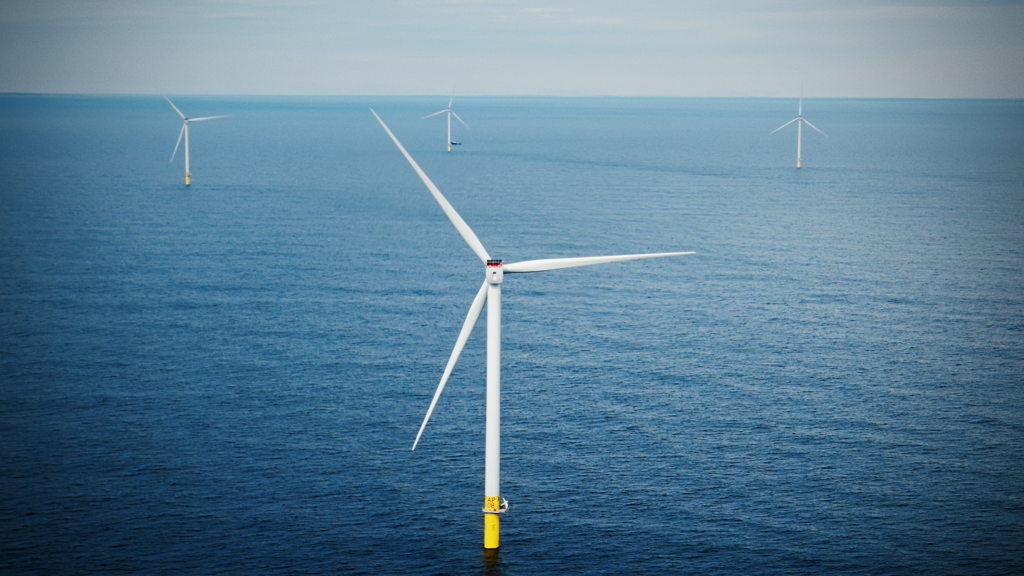
Ørsted have built more wind farms at sea than any other company worldwide. They now operate Hornsea 2 in the UK, the world’s largest operational offshore wind farm when it was launched, and in the UK alone, its 12 operational offshore wind farms generate more than 7% of the country’s electricity – enough renewable power for nearly six million homes.
In total Ørsted have installed more than 10 GW of offshore wind, enough to power around 22 million people’s homes around the world, and a further 8.1 GW is under construction across Europe, the United States and Taiwan, including Hornsea 3, which is set to be the world’s largest once complete by 2030.
The shift reaches beyond Ørsted itself. It has worked with North Sea governments to help shape the policies the industry needs to invest with confidence, while retraining workers and creating apprenticeships so local communities move with the change. Across Europe, the offshore wind industry now supports close to 100,000 jobs, in ports, factories and vessels.
Ørsted is helping the world reach a positive tipping point – a threshold in a system beyond which change becomes self-propelling. Ørsted’s transformation is helping drive one of clean energy’s clearest tipping points: for solar and wind energy to overtake fossil fuels. Its work is especially significant given that solar and wind need to provide more than 60% of global electricity by 2030.
As a Finalist, The Earthshot Prize will help Ørsted share the lessons of its transformation and connect policymakers, businesses, workers and communities around the role renewable energy can play in climate action, energy security and job creation.
We’re incredibly proud to be named a Finalist for The Earthshot Prize – it’s a testament to what our team has built over the past decades together with good partners: an entirely new heavy industry.
We made a deliberate choice to shift our business from fossil fuels to offshore wind that today powers millions of homes. But this story is just as much an industry one as it is an energy story. In Europe alone, the offshore wind industry supports close to 100,000 jobs across through people working in ports, factories, and vessels to build and service the offshore wind farms that strengthen energy security, and power homes and businesses with affordable electricity for decades to come.